





Which high frequency power inverter is best for solar systems?
- High-Frequency Power Inverters: Essential Guide for Solar System Integration
- 1. What Are High-Frequency Power Inverters?
- 2. What Are the Advantages of High-Frequency Inverters?
- 3. How Do High-Frequency Inverters Compare to Low-Frequency Inverters?
- 4. Which High-Frequency Inverter Is Best for Solar Systems?
- 5. What Are the Key Considerations When Choosing a High-Frequency Inverter for Solar Systems?
- 6. How Do High-Frequency Inverters Contribute to the Efficiency of Solar Systems?
- 7. Are There Any Limitations to High-Frequency Inverters in Solar Applications?
- Conclusion: Why Choose Congsin High-Frequency Inverters?
High-Frequency Power Inverters: Essential Guide for Solar System Integration
High-frequency power inverters are pivotal in modern solar energy systems, converting direct current (DC) from solar panels into alternating current (AC) suitable for household appliances and grid integration. Their efficiency, compactness, and reliability make them a preferred choice for many solar installations. This guide addresses common questions to assist in selecting the ideal high-frequency inverter for your solar setup.
1. What Are High-Frequency Power Inverters?
High-frequency power inverters operate by rapidly switching DC voltage at frequencies typically between 20 kHz and 100 kHz. This high-frequency switching allows for the use of smaller, lighter components, resulting in a more compact and efficient inverter design. Unlike low-frequency inverters, which operate at standard power line frequencies (50–60 Hz) and require larger transformers, high-frequency inverters utilize advanced semiconductor components like MOSFETs or IGBTs to achieve rapid switching, enhancing overall efficiency and reducing size.
2. What Are the Advantages of High-Frequency Inverters?
Compact and Lightweight: The use of high-frequency switching technology and compact circuit design results in inverters that are significantly smaller and lighter than their low-frequency counterparts. This makes them ideal for applications where space and weight are critical factors.
High Efficiency: High-frequency inverters typically achieve efficiencies between 90% and 95% at rated load, maintaining peak efficiency across a wide range of loads. This is particularly beneficial for systems with variable electronics.
Cost-Effective: Generally, high-frequency inverters are more affordable than low-frequency inverters, making them a cost-effective solution for many applications.
3. How Do High-Frequency Inverters Compare to Low-Frequency Inverters?
| Aspect | High-Frequency Inverters
| Low-Frequency Inverters |||||| Size and Weight | Compact and lightweight, ideal for mobile applications and limited spaces. | Larger and heavier, suitable for stationary applications where size and weight are less critical. || Efficiency | Higher efficiency (90–95%) at rated load, especially beneficial for variable electronics. | Slightly lower efficiency (85–90%) at rated load, but better at higher loads. || Surge Capacity | Can handle brief surges of 1.5–2 times rated power for 3–5 seconds. | Can handle brief surges of 3–5 times rated power for 10+ seconds, suitable for motor loads. || Lifespan | Typically 5–8 years, suitable for daily use. | Typically 10–15 years, with some lasting up to 20 years, ideal for heavy-duty applications. |
4. Which High-Frequency Inverter Is Best for Solar Systems?
Selecting the optimal high-frequency inverter for your solar system depends on various factors, including power requirements, system configuration, and budget. Here are some top recommendations:
Vantom Power VAN II Off-Grid Inverter: A pure sine wave inverter with a 3kW MPPT, suitable for off-grid applications. It offers a wide PV input voltage range and is compatible with mains or generator power.
Must Power PV1800 VHM Series: A high-frequency off-grid solar inverter integrating inverter, solar charger, and AC battery charger into a single compact unit. Available in 5KW and 10KW models, it provides stable, high-efficiency power output for residential and light commercial applications.
Enphase Energy Microinverters: These microinverters convert DC from individual solar panels into grid-compliant AC power, offering modularity and the capability to extract maximum available power from each photovoltaic module.
5. What Are the Key Considerations When Choosing a High-Frequency Inverter for Solar Systems?
Power Rating: Ensure the inverter's power capacity matches or exceeds your system's requirements to handle peak loads effectively.
Efficiency: Higher efficiency reduces energy loss and operational costs, contributing to the overall performance of your solar system.
Surge Capacity: Consider the inverter's ability to handle brief power surges, especially if your system includes appliances with high startup currents.
Compatibility: Verify that the inverter is compatible with your solar panels, battery storage, and other system components.
Warranty and Support: Opt for inverters from reputable manufacturers that offer comprehensive warranties and reliable customer support.
6. How Do High-Frequency Inverters Contribute to the Efficiency of Solar Systems?
High-frequency inverters enhance solar system efficiency by:
Minimizing Energy Loss: Their high switching frequencies and advanced components reduce energy loss during the DC to AC conversion process.
Optimizing Power Output: By maintaining high efficiency across various load conditions, they ensure consistent and reliable power delivery from the solar panels to the grid or appliances.
Reducing System Size and Cost: Their compact design allows for smaller and more cost-effective system configurations, making solar energy more accessible and practical for a wider range of applications.
7. Are There Any Limitations to High-Frequency Inverters in Solar Applications?
While high-frequency inverters offer numerous advantages, they also have some limitations:
Surge Handling: They may not handle large power surges as effectively as low-frequency inverters, which can be a consideration for systems with equipment that requires high surge capacity.
Lifespan: Typically, high-frequency inverters have a shorter operational lifespan compared to low-frequency inverters, which may be a factor in long-term planning.
Cost: While generally more affordable, the initial cost savings may be offset by the need for more frequent replacements or maintenance over time.
Conclusion: Why Choose Congsin High-Frequency Inverters?
Congsin offers a range of high-frequency inverters designed to meet the diverse needs of solar system installations. Their products are known for:
Advanced Technology: Incorporating the latest in inverter technology to ensure optimal performance and efficiency.
Reliability: Built to withstand various environmental conditions, ensuring consistent power delivery.
Customer Support: Providing comprehensive warranties and responsive customer service to support your solar energy journey.
By selecting Congsin high-frequency inverters, you can enhance the performance and longevity of your solar system, contributing to a more sustainable and cost-effective energy solution.
References:
Vantom Power VAN II Off-Grid Inverter:
Must Power PV1800 VHM Series:
Enphase Energy Microinverters:
High-Frequency Inverters: Powering Modern Electronics Efficiently:
Low Frequency Vs. High Frequency Inverters - YouTube:


Modified Sine Wave Inverters
Can it be used with a car cigarette lighter socket?
Yes, it supports both battery clip and cigarette lighter connection.
How many devices can it power at the same time?
Dual universal sockets + two USB ports can power multiple devices (such as two home appliances + two mobile phones) at the same time, as long as the total power does not exceed 600W.
Can 4 USB ports charge 4 mobile phones at the same time?
Yes, the total current of 6.8A can support simultaneous fast charging of multiple devices, and the charging efficiency is guaranteed.
How to connect to the battery?
Use the included battery clips, connect the red clip to the positive pole of the battery and the black clip to the negative pole. Ensure good contact and no short-circuit risk when connecting.
Pure Sine Wave Inverters
Can it be used in RVs or trucks?
Yes. The device input voltage is DC 12V, which matches the battery voltage of RVs and trucks. It can be connected via battery clips or cigarette lighter interface (need to confirm that the maximum current of the cigarette lighter is ≥10A) to supply power to car refrigerators, parking air conditioners, laptops, etc.
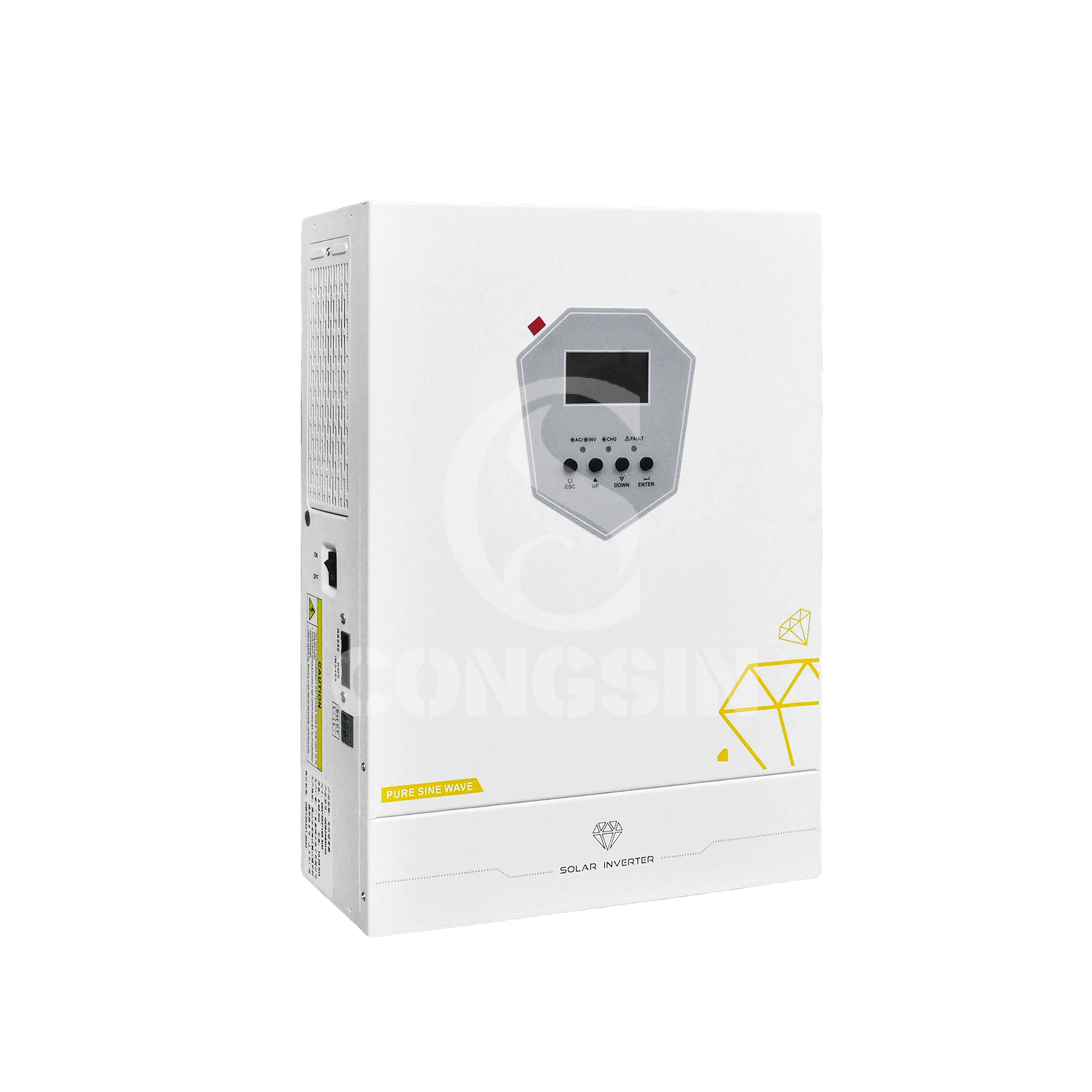
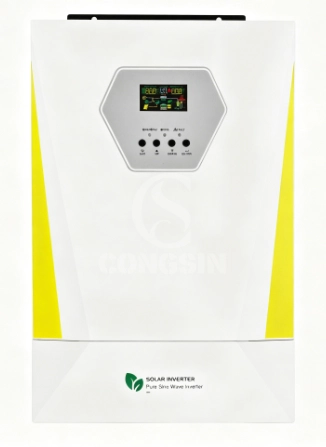
Power your solar system efficiently with the Congsin 4000W and 6000W Hybrid Inverter. Featuring an integrated MPPT Controller, this CE Certified inverter ensures optimal energy conversion. Monitor performance effortlessly via the intuitive LCD Display. Reliable, powerful, and ready for your sustainable energy needs.
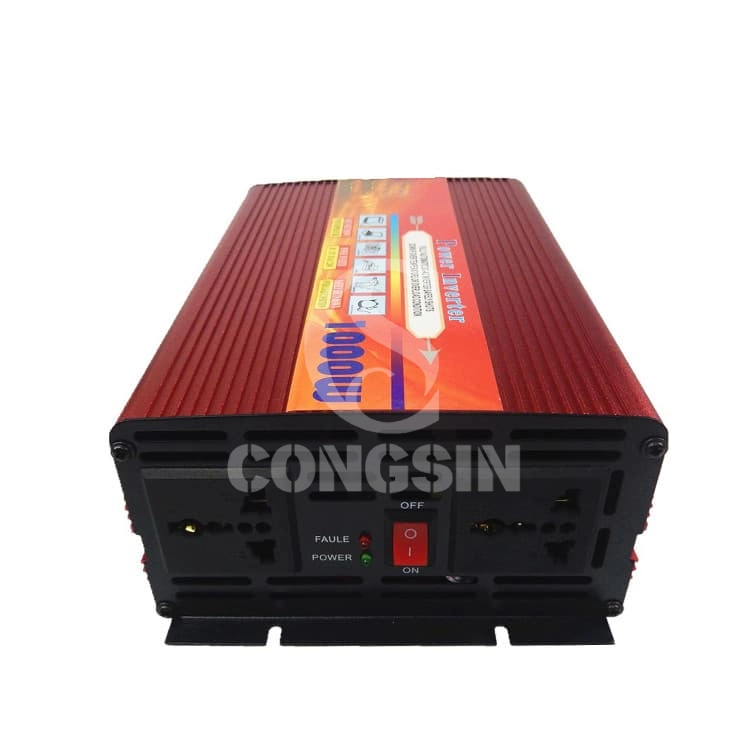
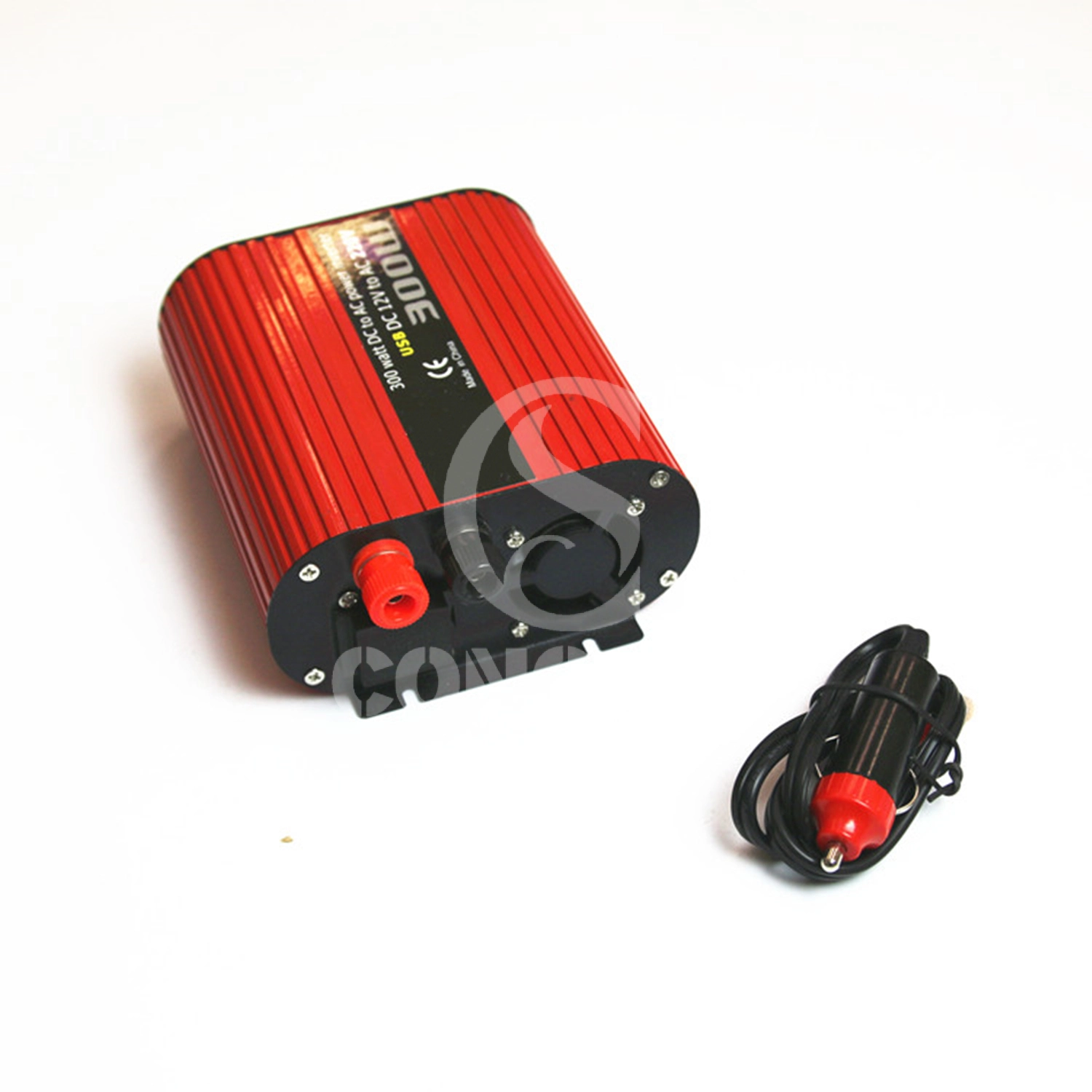
Congsin's Portable 150W Modified Sine Wave Inverter powers your journey! This versatile Car Power Inverter with USB acts as a reliable 12V to 220V converter, ensuring an essential off-grid power supply. With dual USB ports and a universal socket, enjoy convenient power on the go.
Get in Touch with Our Team
You can also communicate with us directly through our online contact form. Please fill in the following information, and our team will contact you as soon as possible after receiving your message.

CONGSIN is a trusted OEM factory for power inverters, solar charge controllers, and DC converters. Reliable solutions for global B2B buyers.
 High Quality
 7/24 Service
 Guaranteed Warranty
© 2025 Congsin. All Rights Reserved.
 WeChat
 Scan QR Code
sin cong
teaimei10
Whatsapp: +8618028086791
Scan QR Code